
What Does It Mean to Have a Data-Driven Culture?
Most companies today collect mountains of data. But more than half still struggle to actually use it when making decisions (i.e., lack a data-driven culture).
You might have dashboards, analytics tools, and reports at your fingertips. Yet your teams may still rely on gut feelings and past experience when it’s time to choose a path forward.
This enormous gap I often see between having data and using data reveals a missing piece in many organizations.
A data-driven culture means everyone in your organization naturally turns to data when making decisions, whether those choices are big strategic moves or small daily tasks.
It’s not just about having the right technology or hiring data scientists. It’s about changing how people think and work across your entire company. Data needs to be democratized.
Building this kind of culture takes real effort. You need leadership support, the right tools and training, teams that work together, and clear ways to measure success.
Defining a Data-Driven Culture in Business
A data-driven culture exists when organizations use facts and information to guide decisions at every level, from daily tasks to long-term planning. This culture requires specific principles, structured processes, and a commitment to making data easily accessible to all employees who need it.
Core Principles and Mindset
A data-driven mindset starts with treating information as a valuable business asset. Your organization needs to truly value facts over intuition when making decisions.
This means looking at what the numbers show before choosing a direction. Trust in data quality forms the foundation of this mindset (and a lack of trust will undermine everything).
You need accurate, reliable information that employees can depend on. When people doubt the data, they won’t use it.
The data-driven organization removes personal bias from choices. Instead of going with gut feelings, you look at evidence.
This doesn’t mean ignoring experience. It means backing up your knowledge with concrete facts.
Key principles include:
- Making decisions based on evidence rather than assumptions
- Questioning data to understand what it really shows
- Accepting when data contradicts your initial beliefs
- Sharing data openly across departments
- Updating strategies when new information appears
Your data-driven workplace culture should encourage employees to ask, “What does the data tell us?” before taking action. This habit becomes automatic when leaders model it consistently.
Data-Driven Decision-Making Processes
Data-driven decision-making follows a clear path from question to action. You start by identifying what you need to know.
Then you gather relevant data, analyze it, and apply the insights. Your organization needs structured methods for this process.
Set up systems that collect information automatically where possible. Create standard ways to analyze and report findings.
Define who owns different types of data. The decision process typically includes:
- Defining the business question or problem
- Identifying what data can answer it
- Collecting and cleaning the information
- Analyzing patterns and trends
- Sharing findings with decision-makers
- Acting on the insights
- Measuring results
You should establish clear data governance practices. These define standards for how data gets managed, who can access it, and how it stays accurate.
Good governance builds confidence in your data-driven culture. Regular reviews keep your processes working well.
Check quarterly if your data products deliver value and if employees use them effectively.
Empowering Employees Through Data
Your employees need both access to data and the skills to use it. A data-driven workplace makes information available to everyone who needs it, not just specialists.
This democratization of data lets people make informed choices in their daily work. Provide training programs that build data literacy.
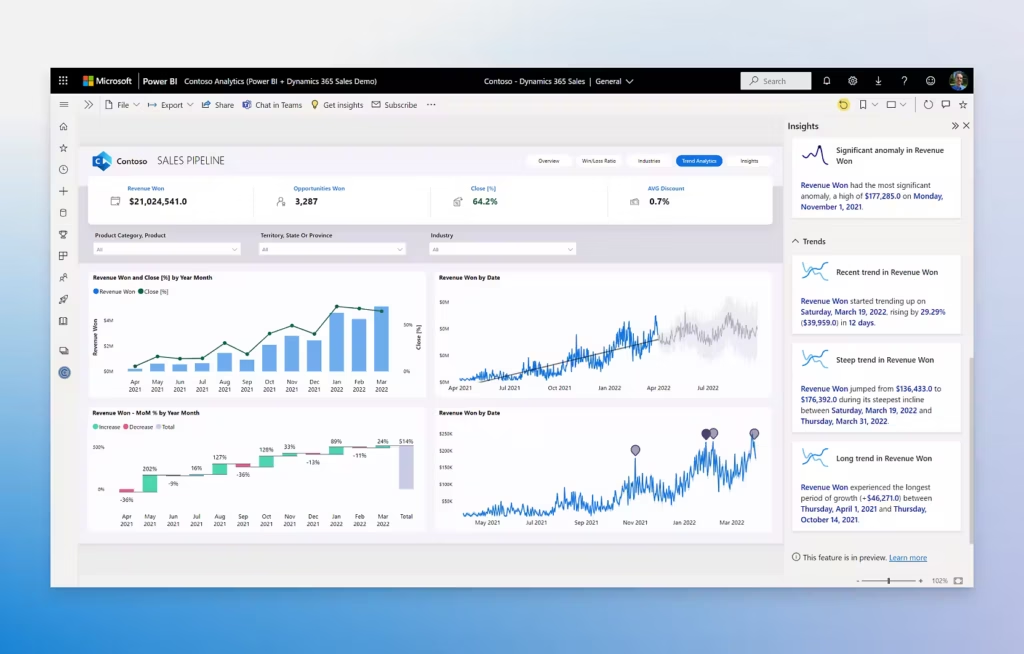
Dashboards foster a data-driven culture
Offer workshops, online courses, and hands-on practice with your data tools. Different roles need different levels of skill, so tailor your education programs.
Make your data tools user-friendly. Complex systems discourage use.
Simple dashboards and clear visualizations help employees understand information quickly (quality over quantity!). You want people spending time on insights, not struggling with technology.
Give employees autonomy to act on what the data shows them. When people can make decisions based on information they access themselves, work moves faster.
This requires trust and clear guidelines about authority levels. Recognize employees who use data effectively.
Public recognition and rewards encourage others to adopt data-driven approaches. Track which departments excel at using data products and share their methods. It is easy in Power BI and other data visualization software to track who is using reporting and how often.
Benefits for Business Outcomes
Your data-driven culture delivers measurable advantages. Organizations that use data effectively gain competitive advantage over peers who are not.
You spot opportunities and problems earlier than competitors who rely on guesswork. Customer experience improves when you base decisions on actual behavior patterns.
Data shows you what customers want, where they struggle, and how they use your products. This lets you serve them better.
Business outcomes include:
- Faster, more confident decisions
- Reduced risk through better forecasting
- Improved operational efficiency
- Higher revenue from data-informed strategies
- Better resource allocation
- Stronger employee satisfaction
People feel more confident in their choices when data backs them up. They waste less time on work that doesn’t matter and focus on what drives results.
When you know what data leads to what results, you can scale successful approaches. This consistency helps you grow while maintaining quality.
Data-driven decision-making also reduces costly mistakes. You test ideas with data before full implementation.
Small failures caught early save resources for bigger wins.
Key Elements for Building and Sustaining a Data-Driven Organization
Building a data-driven culture requires more than just technology and tools. You need strong leadership support, clear governance practices, open collaboration, and ongoing investment in your team’s skills to make data a natural part of daily work.
Leadership Commitment and Data Strategy
Your leadership team must actively champion data use across your organization. When executives treat data as a core business asset and make decisions based on evidence rather than intuition alone, they set the standard for everyone else.
Key leadership actions include:
- Setting a clear data strategy that aligns with your business goals
- Allocating budget and resources for data initiatives
- Modeling data-driven decision-making in meetings and communications
- Rewarding employees who use data effectively in their work
Many organizations appoint a chief data officer to lead this transformation. This role coordinates data strategy across departments and ensures that data initiatives support your organizational strategy.
Without executive advocacy, your efforts to create a data-driven culture will likely stall at the department level. Leaders should also integrate data use into performance reviews and promotion decisions.
This shows your team that data skills matter for career growth.
Establishing Data Governance and Quality
You can’t build trust in data without proper data governance. Your organization needs clear rules about who can access data, how to handle it, and who maintains it.
Strong data governance practices include:
- Access controls that balance security with usability
- Data quality standards and regular audits
- Clear ownership and accountability for each data source
- Documentation of data definitions and business terms
Your IT team and business users must work together on data management. IT provides the technical foundation and security, while business teams define what data they need and how they’ll use it.
This partnership ensures your data remains both secure and useful. Regular monitoring keeps your data reliable over time.
When people trust the data they see, they’re more likely to base important decisions on it.
Fostering Collaboration and Data Accessibility
Breaking down data silos requires intentional effort. You need to make data available across departments while maintaining appropriate security controls.
Collaboration happens when you create spaces for people to share insights and learn from each other. This might include data user groups, internal forums, or regular show-and-tell sessions where teams present their findings.
Many successful organizations develop internal communities led by data enthusiasts who help others get started. Data accessibility means different things at different levels.
Entry-level employees might need simple dashboards, while analysts require direct database access. Self-service analytics tools let people explore data without always waiting for IT support and this is critical for fast-paced decision making.
Your data team should focus on enabling others rather than gatekeeping information. When you make it easy for people to find and use data, it becomes part of everyday conversations and decisions.
Investing in Data Literacy, Training, and Upskilling
Your employees need the right skills to actually work with data. Data literacy isn’t just for analysts—everyone should know the basics, like reading charts and questioning where data comes from.
It helps if folks can spot misleading statistics, too. That’s just part of being savvy in today’s world.
Set up a training and education program that covers different skill levels. New people might want to start with beginner workshops.
Those with more experience can dig into advanced courses or learn specific tools. Mix in hands-on practice and let skilled colleagues mentor others—it’s way more effective than just sitting through slides.
Upskilling isn’t a one-and-done deal. Tech moves fast, and honestly, best practices change before you know it.
Keep learning going. Some companies even run data challenges or friendly competitions to keep things interesting and help people stay sharp.
Change management really matters here. People tend to resist new ways of doing things, so you’ll want to address concerns and celebrate early wins.
Support goes a long way during any transition. Building a data-driven culture takes time—sometimes a lot of it—so patience and persistence usually matter more than speed.
Outcomes of a Data-Driven Culture
I can tell you from experience that having a data-driven culture can be one of the biggest wins an organization can have. I have seen companies save 15-25% on labor costs just by having visibility, the proper reporting, and accountability. This is just one line-item on the P&L. Imagine if data drove all decisions on all line items. It is game changing!