
What Does a Career in FP&A Look Like: From Education to Career Path
Honestly, in the world of finance, it feels like FP&A is woefully under represented. I can you tell that not once was the acronym FP&A mentioned during either my Accounting Masters or MBA! At the time, I would have greatly appreciated someone clueing me in to the existence of this exciting and rewarding career path.
Anyways, that is the subject of today’s post, as I feel like it is my responsibility now to help educate the world (particularly younger people) that there are more options in finance than just M&A and investment banking.
Financial planning and analysis gives professionals an opportunity to mix technical know-how and strategic thinking. FP&A professionals handle budgeting, forecasting, operational and financial reporting, usually working side-by-side with leadership to steer business strategy and resource planning. It is also a very technology-driven profession, which can be exciting for people who like more than just spreadsheets.
The FP&A path is a pretty direct path from entry-level analyst all the way to CFO (sometimes CEO). I do suggest working closely with operations at each company to ensure you really understand the business and aren’t just some person moving numbers around spreadsheets.
Getting started in FP&A doesn’t always mean you need a particular degree, though certain ones help and a lot of jobs still ask for one. On the technology side, you will want to at a minimum brush up on Excel and be ready to pick up a bunch of other skills along the way.
Below, you’ll find more details about what you need to know about building an FP&A career. I’ll cover my thoughts on education, the skills employers really want (given I hire these people regularly!), typical career progression, etc.
Key Takeaways
- FP&A careers kick off with some core skills in Excel and a basic understanding of accounting and finance —even if you don’t have a formal degree
- Career ladders frequently go from analyst to CFO with 2-4 year pit-stops at each level
- Certifications like CPA and hands-on FP&A software experience can open a lot of doors, although again not required
The FP&A Career: From Start to Finish
Getting into FP&A can sometimes be tricky as some employers require a mix of formal education (accounting or finance degrees) and technical skills (Excel, Python, SQL). That said, I have also seen people (hired them myself) pivot from unrelated fields. The key in my opinion is having a detailed-oriented and analytical mind. For example, engineers make great FP&A professionals, but you won’t read than anywhere except in this blog.
Essential Degrees and Academic Background
Again, you don’t have to have a finance degree for FP&A, but employers (including myself) lean toward business-related backgrounds. Finance, accounting, economics, and business administration are common picks; but I personally skew toward accountants as they have a fundamental foundation with financial statements that is hard to replace “on the job.”
An MBA can help you climb faster, especially if you’re eyeing management. That said, with the onslaught of accelerated, weekend, and executive MBAs, the prestige of an MBA has been diluted. Most MBA programs only require a couple accounting courses so for those who go from unrelated fields to the MBA, I sometimes find they are missing some fundamental accounting knowledge.
You will have a little bit of an uphill battle coming from a totally different background, but I encourage you not to give up. Encourage the employer to give you a chance to show what you can do. As I said, I work with and have known some great FP&A professionals with no prior accounting or finance education or certifications. Honestly, your thought process, ability to analyze data, and ability to provide thoughful insights matters more than your diploma.
Key Technical Skills for FP&A Success
Excel is huge in FP&A, so I think it is key to brush up on this program particularly if you lack formal education in Accounting or Finance. At a minimum you really need to know formulas (vlookups, sumifs, countifs, etc.) and basic modeling. If you can do these things, you’ll stand out.
Financial modeling and analysis are daily staples so get ready to work with some unruly workbooks that you inherit from someone who had no idea what they were doing. That is your chance to clean up and streamline!
Experience with data visualization tools will also give you a leg up. Power BI and Tableau are pretty commonplace at this point and can help you slice and dice data more efficiently. There are just some things that you can’t do in Excel efficiently, and Power BI will make more sense.
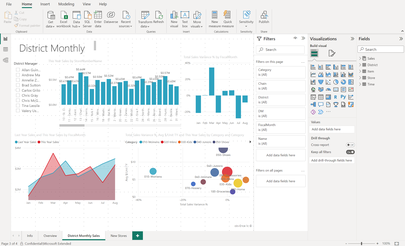
Image of Power BI Dashboard
Valuable Professional Certifications
There are quite a few out there inlcuding the FPAC, but I really don’t put a ton of stock in them. I swear there is a post on reddit almost daily about whether the CFA (Chartered Financial Analyst) matters. Honestly, it is more geared towards investment analysis and portfolio management. Given I equate FP&A more with operational finance/analytics, I don’t really see the value. Coming from accounting? A CPA (Certified Public Accountant) shows you stayed the course and passed those grueling exams. More importantly, the CPA tells me I can talk to you about debits and credits and you probably will be able to balance a balance sheet and statement of cash flows (key stills I think MBAs miss).
Certifications sometimes show grit, but aren’t a requirement in my opinion. I will take more experience over a certification any day.
Building Experience Through Internships
Internships give you hands-on experience before you go full-time and also tell your potential full-time employer that you have tried FP&A and that you like it! Honestly, that to me is a win-win for everyone so that nobody wastes anybody’s time. If you are unable to get an internship, I do put value in taking Power BI courses. Given my team uses the program all day, every day, not having to start from zero on day one is a plus. You will also appreciate not being completely lost with the program when someone tosses a Power BI project at you.
Typical FP&A Roles and Job Progression
Most people start as an FP&A Analyst. At that stage, you handle basic financial modeling, lots of variance analysis, and run A LOT of reports. The key is to not just run on autopilot. Take an extra 15 minutes and analyze the data from that report senior management asked for. Bringing one insight on what you see will show initiative and expedite your learning. Expect to sit in the analyst role for 2-3 years.
After a few years, you move up to Senior Analyst or Senior Financial Analyst. Now you’re taking on tougher projects and maybe handling some tasks start-to-finish versus pieces of larger tasks. You will interface more with operations and other leaders. Again, expect to sit in this role for 2-3 years.
Next up is FP&A Manager and Senior Manager. Here, you manage other analysts and coordinate entire projects. You become a true finance business partner for other leaders around the organization, translating numbers into recommendations. Your people skills start to matter a lot more since you have to be able to articulate the “data story” versus just running a report and dumping the outcome on someone else. Expect to sit in this role for 4-6 years. Many professionals get stuck here and oftentimes that is due to an inability to tell the story behind data effectively (you love the details too much and want to overshare, but sadly nobody else cares!) or think bigger picture.
Director or VP of FP&A puts you in charge of the whole planning function. You help set long-term strategy, guide big finance decisions, and report right to the CFO. You’ll lead strategic initiatives and have a real impact on how the company moves forward.
Some FP&A professionals go on to become CFO, running all financial operations and strategy. It’s the top of the ladder and has both the inward “FP&A focus” and external “Stakeholder focus.”
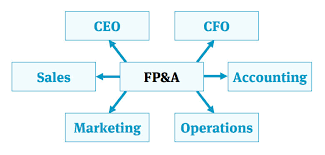
FP&A Career
Compensation and Rewards Along the FP&A Ladder
Pay is very variable by location and years of experience. Entry-level analysts usually make $60,000-$75,000, but again depends on a ton of factors: education, experience, geography. From there, raises and bonuses can be generous depending both on your performance and company performance. Overall FP&A can be a very lucrative career.
CFO pay is all over the map but usually starts around $150,000 and can go past $1,000,000 at big companies. At the top, you might also get equity, profit sharing, and some pretty nice benefits.
Summary
In summary, I really hope the above gave you some food for thought on an FP&A career. I have found it to be highly rewarding, particularly when I am working directly with business leaders to make sense of data, improve decision-making, and grow profitability. It is the type of career where you can see the impacts of your work and will get to learn many things along the way. I recommend you get exposure to various industries as the FP&A techniques industry to industry can vary. To expedite your progression, make sure you are talking to your superiors and asking for new projects or ways you can improve. Also, try and have some fun! If you have any questions, please feel free to reach out or check out our Careers Page.